Accelerate your nasal drug delivery development with comprehensive aerosol characterization and specialized device testing tailored for regional and systemic therapies.
Nasal drug delivery has expanded beyond local decongestants into a sophisticated platform for systemic administration, rapid emergency response, and direct nose-to-brain targeting. Whether you are developing liquid nasal sprays or unit-dose powder nasal devices, securing regulatory approval (FDA, EMA, MHRA) requires precise characterization of spray dynamics, dose uniformity, and droplet size distribution.
At Emmace, we combine state-of-the-art analytical instrumentation with deep inhalation science expertise and provide comprehensive, analytical testing tailored for formulation screening, bioequivalence studies, and CMC regulatory filings.
Comprehensive Nasal Characterization Capabilities
We offer a full suite of analytical testing methods tailored to the unique physical and fluid-dynamic properties of nasal delivery systems:
Droplet Size Distribution (ISO 13320 / Laser Diffraction): Real-time measurement of D10, D50, D90, and Span using Malvern Spraytec instrumentation to evaluate plume formation and temporal droplet evolution.
Plume Geometry & Spray Pattern: High-speed imaging and laser sheet visualization to measure plume angle, spray width, ovality ratio, and cross-sectional area in accordance with FDA guidelines.
Delivered Dose Uniformity (DDU) & Shot Weight: Precise evaluation of delivered dose per actuation, priming/re-priming dynamics, and shot weight consistency across container life.
Aerodynamic Particle Size Distribution (APSD / Cascade Impaction): Determination of the fine particle fraction () using modified cascade impactors to quantify potential lung deposition risks from fine droplets.
Automated Actuation Profiling: Controlled, robotic actuation setup to eliminate analyst-induced variability in stroke length, actuation velocity, and hold time.
Characterizing a nasal spray or powder device requires more than running standard laboratory protocols. Factors such as device actuation force, viscosity, formulation surface tension, and plume velocity directly impact clinical efficacy and nasal deposition patterns.
In Vitro Bioequivalence (BE) Testing: Generating robust comparative data (DDU, Droplet Size, Spray Pattern) for generic nasal spray submissions (ANDAs).
Device & Formulation Screening: High-throughput optical testing to rapidly evaluate prototype actuators, pumps, and formulation rheology.
Stability & Lifetime Characterization: Assessing spray pattern stability and dose recovery across shelf-life and stress conditions.
Unlocking the Science Behind the Plume
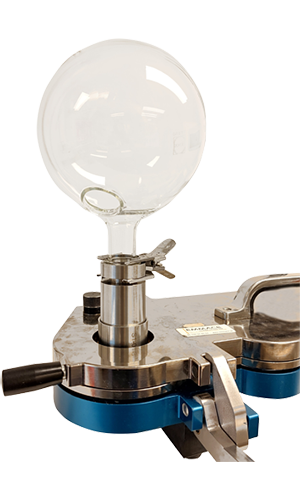
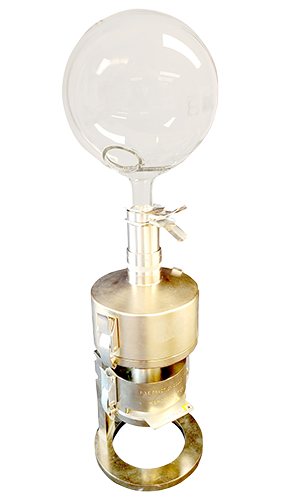
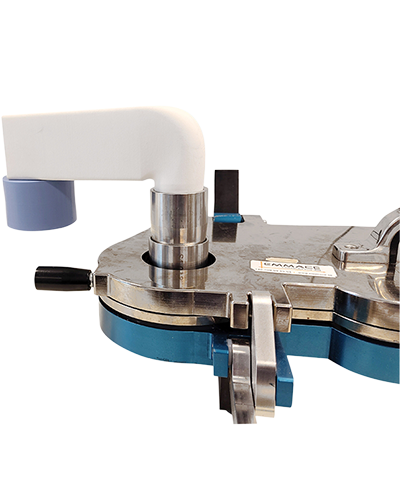
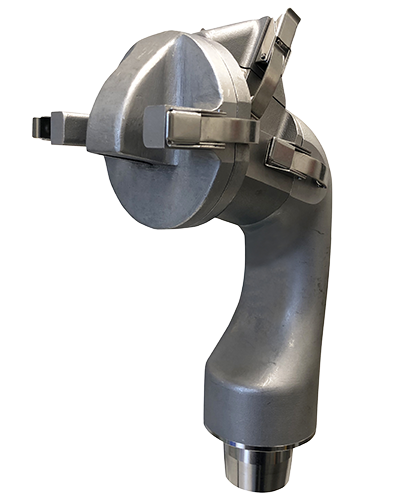
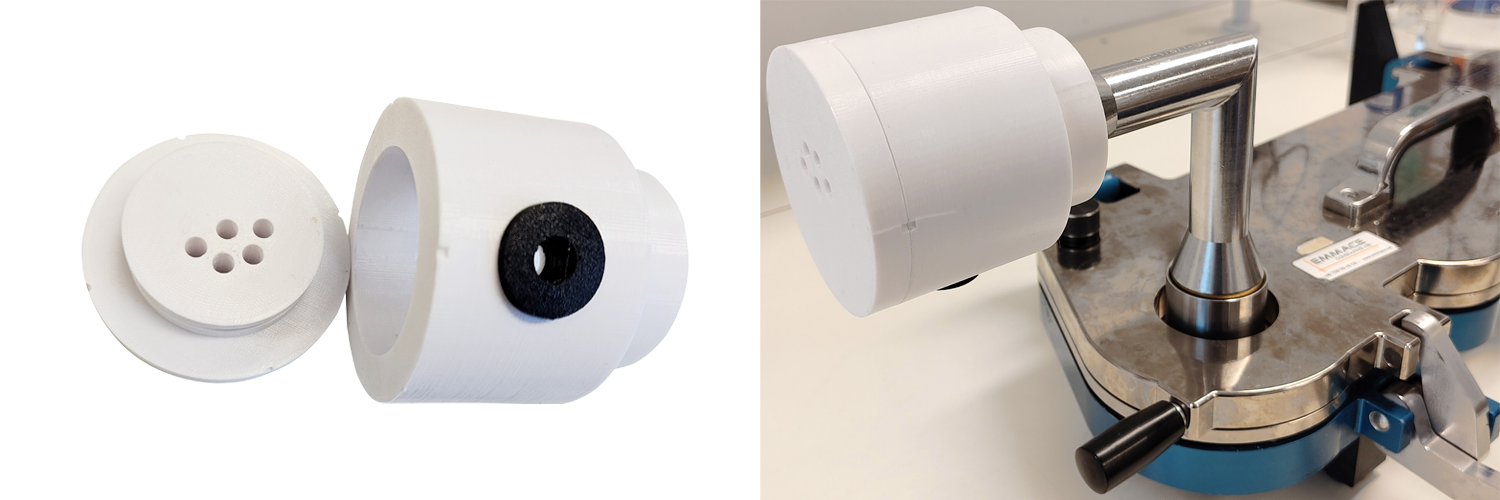
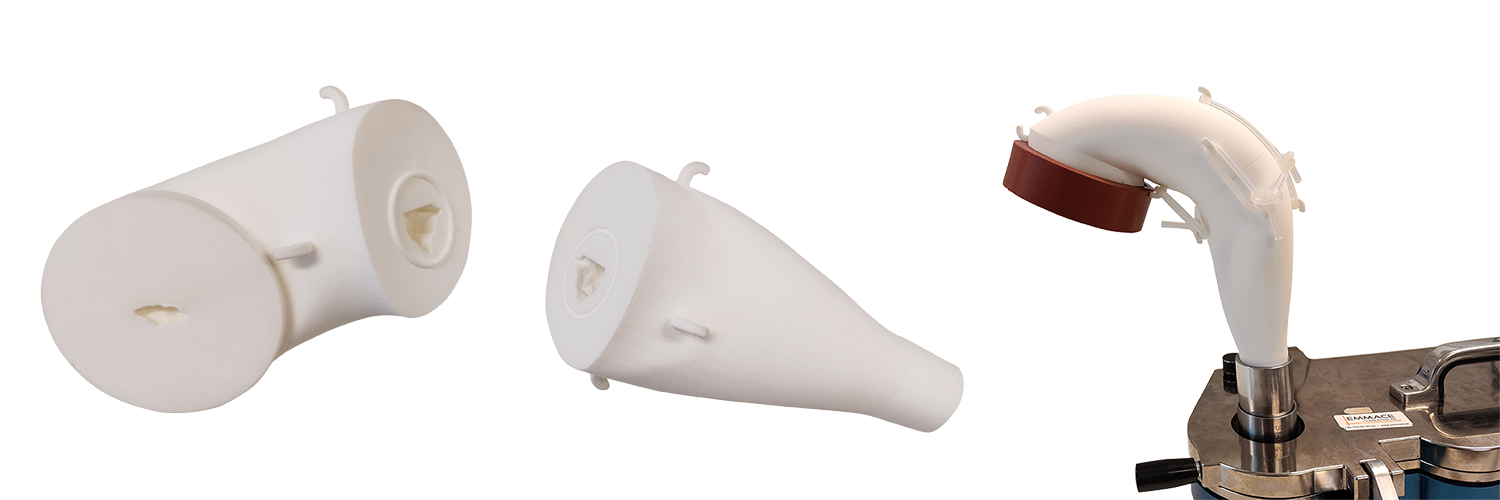
Data points alone cannot resolve complex formulation or device challenges. When faced with irregular plume geometry, wide droplet distributions, or actuation failures, you need experienced scientists who understand the underlying physics. Moreover, we offer testing using different inlets between the device and the NGI cascade impactor (or abbreviated impactor), se pictures below.
Glas inlet, 1 and 2 liter
Glas inlet on Fast Screening Impactor (FSI)
Anatomical Nasal model (Nasal cavity + nasopharynx)
Alberta Idealised Nasal Inlet (AINI)
Kiel Nasal Inlet (KNI)
Extended Anatomical Nasal model (Nasal cavity + nasopharynx + hypopharynx)
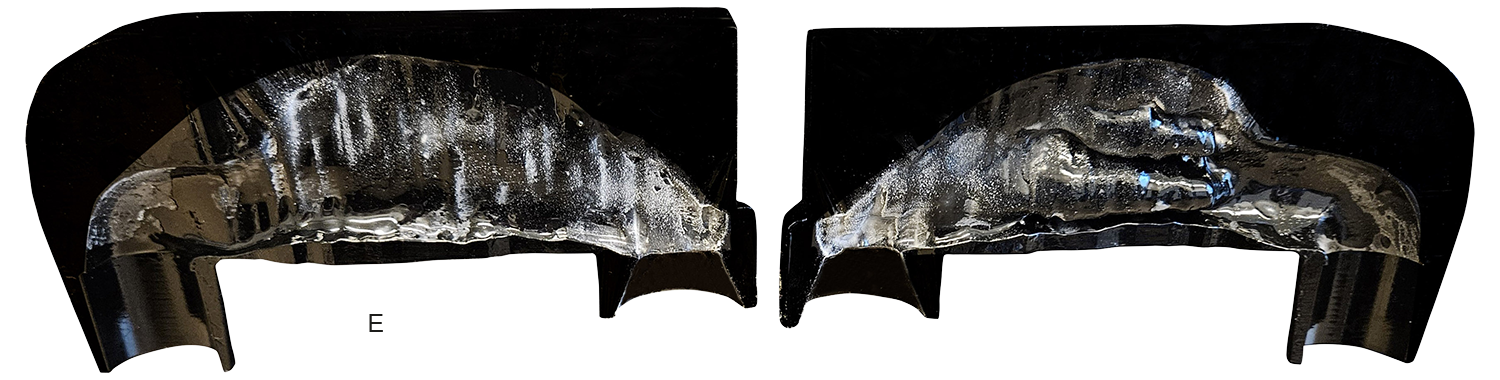
The deposition of powder or droplets can be studied in different nasal cavity designs, depending on what kind of questions to be answered,
Fractionated deposition, nostril, middle, nasopharynx, and portion entering the hypopharynx region (A)
Deposition in nasal region as one determination (B)
Transparent version for visual confirmation of droplet deposition (C)
Solid black design for visual confirmation of powder deposition (D, E)
Specialized Nordic Precision & Quality Framework
Emmace operates a specialized CRO laboratory located in Lund, Sweden, within the renowned Medicon Valley cluster. While our nasal device testing services fall outside our ISO 17025 accreditation scope, all testing is executed within our rigorous laboratory quality management system aligned with international pharmacopeial standards (Ph. Eur. and USP).