
Emmace Insight:
The Importance of Condensate Volume Determination According to ISO 18562-4
Background
For medical device manufacturers, ensuring the safety of a product is paramount. When it comes to devices that interact with a patient’s respiratory system—the breathing gas pathway—specific biocompatibility standards must be fulfilled. The ISO 18562 series address the biological evaluation of these gas pathways, as the ISO 10993 series does not adequately address inhalation-specific risks.
The ISO 18562 Comprises Four Parts:
- Part 1: Evaluation and testing within a risk management process.
- Part 2: Tests for emissions of particulate matter.
- Part 3: Tests for emissions of volatile organic substances (VOS).
- Part 4: Tests for leachables in condensate.
This article focuses exclusively on ISO 18562-4, outlining its crucial role in patient safety and highlighting Emmace’s advanced, accredited method for compliance.
ISO 18562-4: Test for Leachables in Condensate
Medical devices that handle breathing gases often experience changes in temperature and humidity, which can lead to the formation of condensate (liquid water) on internal surfaces. This condensate, which essentially is distilled water, can then dissolve or “leach” chemicals from the device’s materials in contact with the breathing gas pathways —such as organic and inorganic (e.g., metal ions) substances denoted leachables. If these leachables reach the patient, it presents a toxicological exposure risk. This is especially relevant for devices like Heat and Moisture Exchangers (HMEs), which are examples of devices that may generate condensate reaching the patient (See Figure 1).
One vital output is to estimate the exposure dose for the quantified and identified leachables that are present in the condensate and could be reach the patient. The standard applies over the expected lifetime of the medical device under normal use, which includes reasonably foreseeable use errors.

Figure 1. Illustation of a Heat and Moisture Exchanger (HME)
mounted on patient.
The ISO 18562-4 Describes an Attractive Step Wise Approach
The evaluation in part four consists of four steps. The first step in compliance with ISO 18562-4, which is critical for clinically relevant exposure assessment and thus potentially for a successful toxicological assessment, is to experimentally determine the volume of condensate that can potentially reach the patient. The complete evaluation steps are:
- Measuring Condensate Volume
- Chemical Characterization
- Calculation of the exposure dose estimate by Tolerable Intake (TI) or Threshold of Toxicological Concern (TTC) if TI is not available.
- Toxicological Risk evaluation according to 109993 parts 1, 12, 17 and 18.
Step 1: Measuring Condensate Volume
If it can be justified that no condensates can reach the patient, no further testing is needed. If not the exposure to leachables shall be established. Determination of condensate volume under worst-case clinically relevant conditions (e.g., temperature, gas flowrate, etc.) may be of value, since resulting condensate volume is not always predictable, and even minor geometric alterations in a device design can have significant impact.
The volume measurement serves as a critical screening step:
- If the determined volume of condensate reaching the patient is <0.1 ml in a 24-hour period under worst-case clinical conditions, no further testing is required. This allows manufacturers to avoid potentially costly, time-consuming, and comprehensive leachable tests.
- If the volume is > 0.1 ml chemical and biological tests and evaluation is to be performed. The determined condensate volume can be used in this step as well, see below.
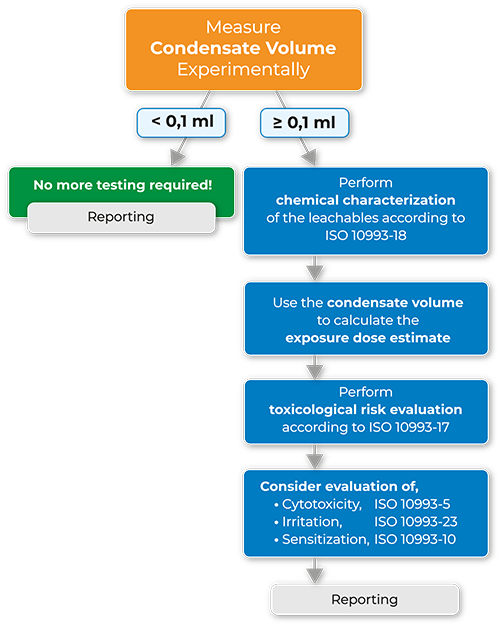
Figure 2. Schematic flowchart of the steps in ISO 18562-4.
Step 2: Chemical Characterization
If the condensate volume is more than 0.1 ml, a chemical characterization is performed to identify and quantify the leachable substances (both organic and elemental). The sample is normally performed by an aqueous extraction on the gas contact surface materials using exaggerated extraction (e.g., higher temperature or longer duration). If sufficient volume is generated in step 1 and the collection is feasible, the chemical characterization on the condensate sample is also possible.
Step 3: Calculation of the exposure dose estimate by TI or TTC if TI is not available.
The experimentally determined condensate volume (step 1), is used to calculate the estimated exposure dose (see A.2 (a) in ISO 18562-4):
Exposure dose estimate/24h = condensate volume (step 1)/24h x concentration of leachable (step 2)
The calculated Exposure dose estimate is then compared to the Tolerable Intake (TI) value, and the toxicological risk is assessed for each relevant leachable. The goal is to confirm that the dose of each identified substance delivered to the patient is less than the derived tolerable intake or Threshold of Toxicological Concern (TTC).
Step 4: Biological Evaluation According to ISO 10993-1: Toxicological Risk Assessment
The results from the test for leachables in condensate according to ISO 18562-4 is part of the biological risk evaluation of the device. Additional testing of water or cell culture medium extracts from the gas contact surfaces is needed to evaluate the following:
- Cytotoxicity (See ISO 10993-5 for more information)
- Irritation (See ISO 10993-23 for more information)
- Sensitization (See ISO 10993-10 for more information)
When performing biocompatibility testing for irritation and sensitization, the sample preparation is performed by a water extraction on the internal gas contact surfaces, in accordance with ISO 10993-12.
Summary
The standard ISO 18562-4: Test for leachables in condensate, describe that measurement of condensate volume under worst-case clinically relevant conditions is used to determine whether testing according to ISO 10993 is needed or not. See Figure 2 (above) for a schematic flowchart. In summary, the amount of condensate volume is used as,
Condensate Volume (24 h) |
Action |
Reference |
| < 0.1 ml | No further testing required | ISO 18562-4: 2024 |
| > 0.1 ml | a) Perform chemical characterization and quantitation of leachables | ISO 10993-18: 2019 |
| b) Use condensate volume to estimate exposure dose to patient | ISO 18562-4: 2024 | |
| c) Perform toxicological risk evaluation | ISO 10993-17: 2023 | |
d) Consider evaluation of,
|
ISO 10993-1: 2025
|
Interested to Determine the Condensate Volume and/or Learning More?
Contact Emmace to discuss how our unique ISO 17025 accredited method for determination of condensate volume under clinically relevant conditions can help you ensure the safety and performance of your respiratory medical devices. We offer this service for both passive and active devices and, since we provide accredited testing according to 18562-2 (PM) and 18562-3 (VOS) as well, we are a convenient test lab for you to use. So, once again and clearly pointed out above, experimentally determination of the condensate volume is key to accelerating and ensuring the accuracy of biological evaluation for medical devices in indirect contact with gas pathways.
See our accreditation for more info.